Water Softener Salt Guide
Water softener salt all does the same basic job — it recharges the resin that pulls hardness minerals out of your water — but the grade you buy changes how clean your brine tank stays, how often it bridges or mushes, and whether any sodium ends up in the softened water. Sodium chloride softener salt is the standard; potassium chloride is the low-sodium alternative. The choice affects running cost, how often you top up the brine tank and the quality of your softened water, so it is worth a moment's thought rather than grabbing whatever bag is nearest — especially for hard-water homes and multi-softener commercial sites that go through salt by the pallet.
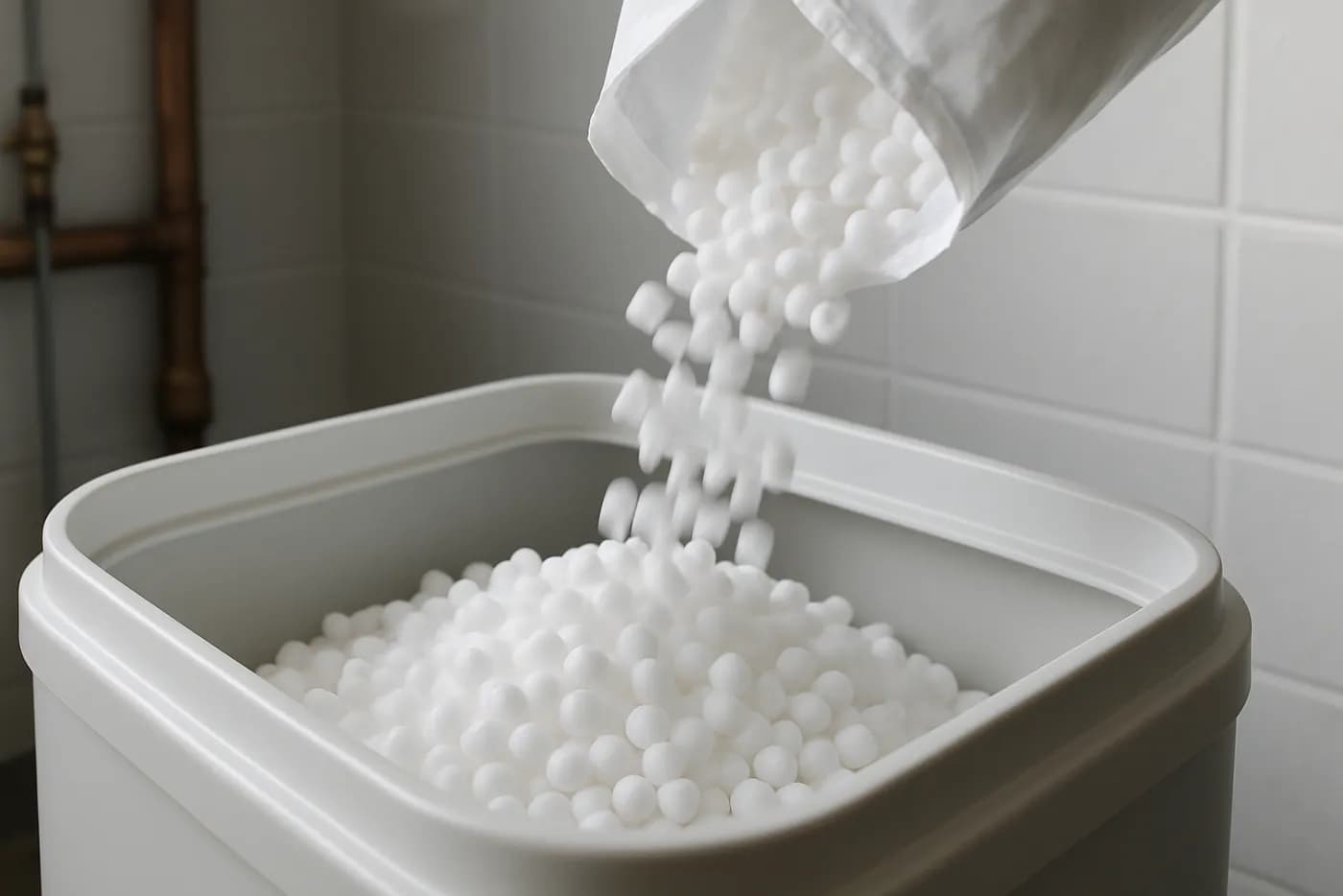
Solar, evaporated and pellet salt
Most softener salt is sodium chloride sold in three common forms. Solar salt, made by evaporating seawater or brine in the sun, is economical and works well for many household and light-commercial softeners. Evaporated and pellet grades are higher purity, dissolve cleanly and leave the least residue in the brine tank — which means less mushing, fewer salt bridges and less maintenance. For hard water or high-use households, the cleaner-dissolving grades usually earn their slightly higher price.
The potassium chloride option
Potassium chloride (KCl) substitutes directly for ordinary softener salt where sodium intake or discharge is a concern — for sodium-restricted diets, for gardens watered with softened water, or where local rules limit sodium in wastewater. It costs more per bag than sodium chloride and you may need to set the softener to use a little more of it, but it adds no sodium to the softened water at all.
Keeping the brine tank healthy
Whatever grade you choose, a few habits keep a softener running cleanly: keep the tank between a third and two-thirds full rather than topping it to the brim, break up any crust or bridge that forms, and avoid mixing a cheap, impure grade with a clean one. Higher-purity salt simply leaves less behind to manage.
Buying in quantity
For property managers, condos and light-commercial sites running several softeners, buying pellet or potassium chloride by the pallet is far more economical than bag-by-bag retail. Chloride.ca supplies sodium chloride and potassium chloride softener grades in bagged and palletized quantities across Canada, with a certificate of analysis available where purity matters.
Hard water and how much salt you use
How much softener salt you go through is driven by your water hardness and your household's water use, not just the grade you buy. Harder water means the resin saturates faster and the softener regenerates more often, so a high-hardness home on a well can easily use several times the salt of a city home on moderately hard water. A cleaner-dissolving evaporated or pellet grade helps here, because it regenerates the resin efficiently and leaves less to clog the system over many cycles. If your salt use seems high, have the hardness tested and the softener settings checked before assuming the salt itself is the problem, since the wrong settings can double consumption regardless of which grade you buy.
Need a quote on bulk or bagged chloride?
Tell us the product, volume and delivery point. Most quotes go out the same business day.