Liquid vs Flake De-Icer
Liquid brine and solid flake are not competitors so much as two tools for two different moments. The deciding question is timing: are you trying to stop ice from bonding to the pavement before a storm (anti-icing), or melt ice and snow that is already down (de-icing)? Get that distinction right and the choice between liquid and flake chloride mostly makes itself. Most operations end up using both — brine to prevent ice from bonding and flake to melt what is already down — so the practical decision is less about which to buy and more about the ratio between them for your routes and equipment.
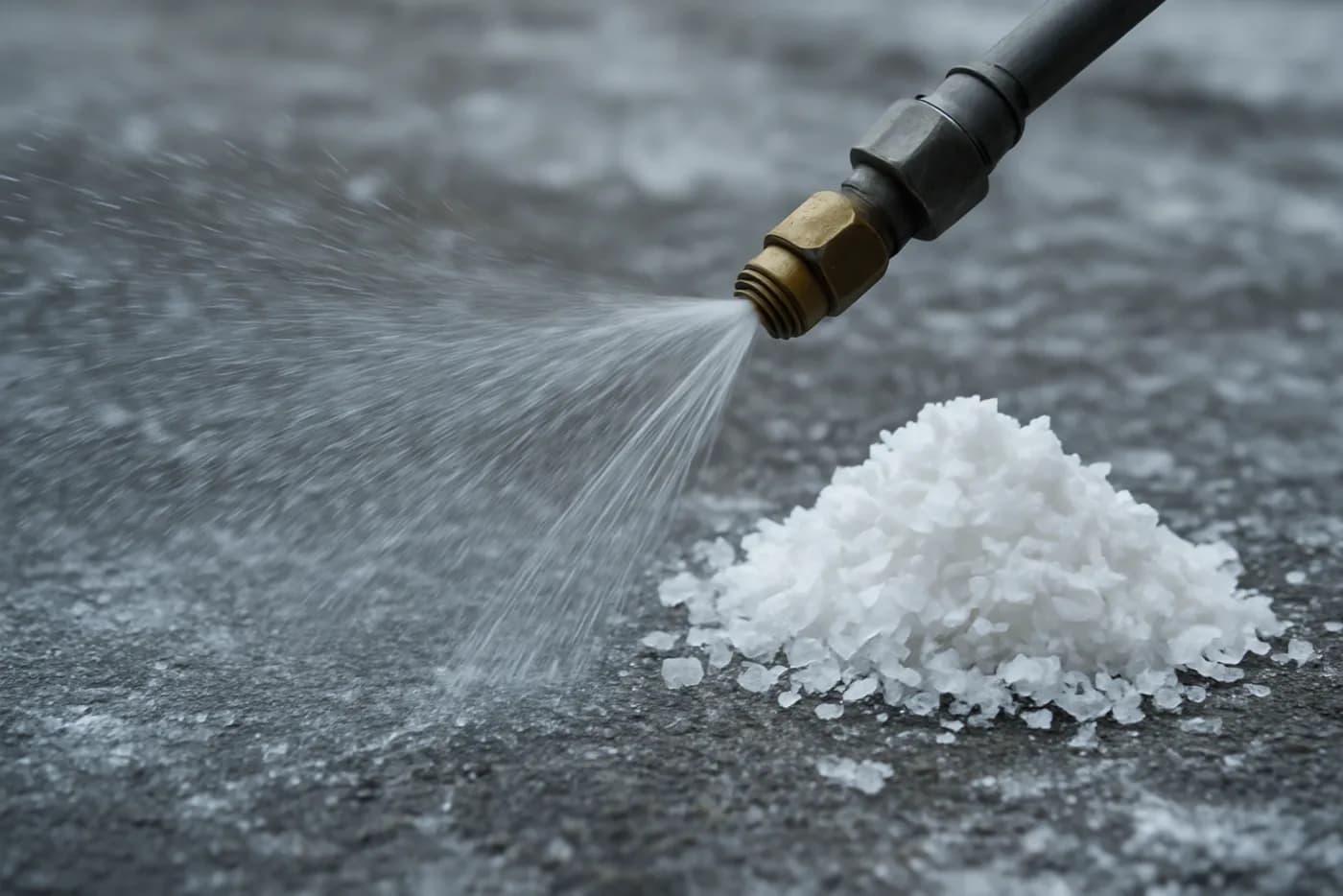
Liquid / brine for prevention
Liquid calcium or magnesium chloride brine is the anti-icing tool. Applied to dry pavement before a storm, it leaves a film that stops snow and ice from bonding, so the eventual cleanup is faster and uses less material. Brine also shines for pre-wetting solids at the spreader: a quick spray makes granules stick to the road instead of bouncing into the gutter, and kick-starts the melt the moment they land. It spreads evenly, covers predictably and avoids the scatter loss that plagues dry product.
Flake / solid for response
Once ice is already bonded to the surface, solid flake and pellet are the better answer. They carry far more melting capacity per load than liquid, so a single application breaks through packed ice that brine alone would only glaze. Solids are also easier to stockpile in volume and apply with standard spreaders, which matters for large lots and long routes.
Most programs run both
In practice the strongest winter programs are not liquid-or-flake — they are liquid-and-flake. Brine goes down ahead of the storm and pre-wets the solids; flake and pellet handle the heavy melting once accumulation is on the ground. Running both off one supplier keeps the chemistry consistent and the resupply simple.
Equipment and storage notes
Liquid needs tanks, pumps and protection from freezing; solids need a dry, covered store to stay free-flowing. Neither is difficult, but the two formats have different handling realities worth planning for before the season. Chloride.ca supplies both liquid brine and solid flake, pellet and bagged chloride nationwide, so you can dial the liquid-to-solid ratio to your routes without changing accounts.
Choosing for your site type
Site type often settles the liquid-versus-flake question faster than chemistry does. High-traffic roads and large commercial lots usually justify a brine system for anti-icing plus solids for response, because the labour and material savings scale with the area. Smaller properties, sidewalks and single entrances rarely warrant liquid equipment — a quality flake or pellet, hand-spread thinly, is simpler and just as effective. Municipalities and contractors with mixed portfolios get the most value from running both formats and assigning each to the routes where it pays, which is exactly the kind of split a single chloride supplier can support without complicating your ordering. Our team can help you set that liquid-to-solid ratio based on your route mix, climate and equipment so you are not over-investing in either format.
Need a quote on bulk or bagged chloride?
Tell us the product, volume and delivery point. Most quotes go out the same business day.