Calcium vs Magnesium Chloride
Calcium chloride and magnesium chloride are the two premium chloride de-icers, and buyers comparing them are usually weighing the deepest-cold performance of one against the gentler, lower-corrosion profile of the other. Both melt ice far better than rock salt once temperatures drop, but they differ on working temperature, melt speed, corrosivity and cost — and the right pick depends on how cold your sites get and what you are trying to protect.
Working temperature
Working temperature is the first thing to check when you compare calcium chloride and magnesium chloride. Calcium chloride stays effective to about −32 °C, while magnesium chloride works to roughly −15 °C before it slows down. For the deepest cold — prairie and northern winters that routinely fall below −20 °C — calcium chloride is the clear choice, because it keeps pulling ice apart at temperatures where most other de-icers, including rock salt, have stopped working entirely. In milder regions, either grade covers the typical season.
Melt speed and heat
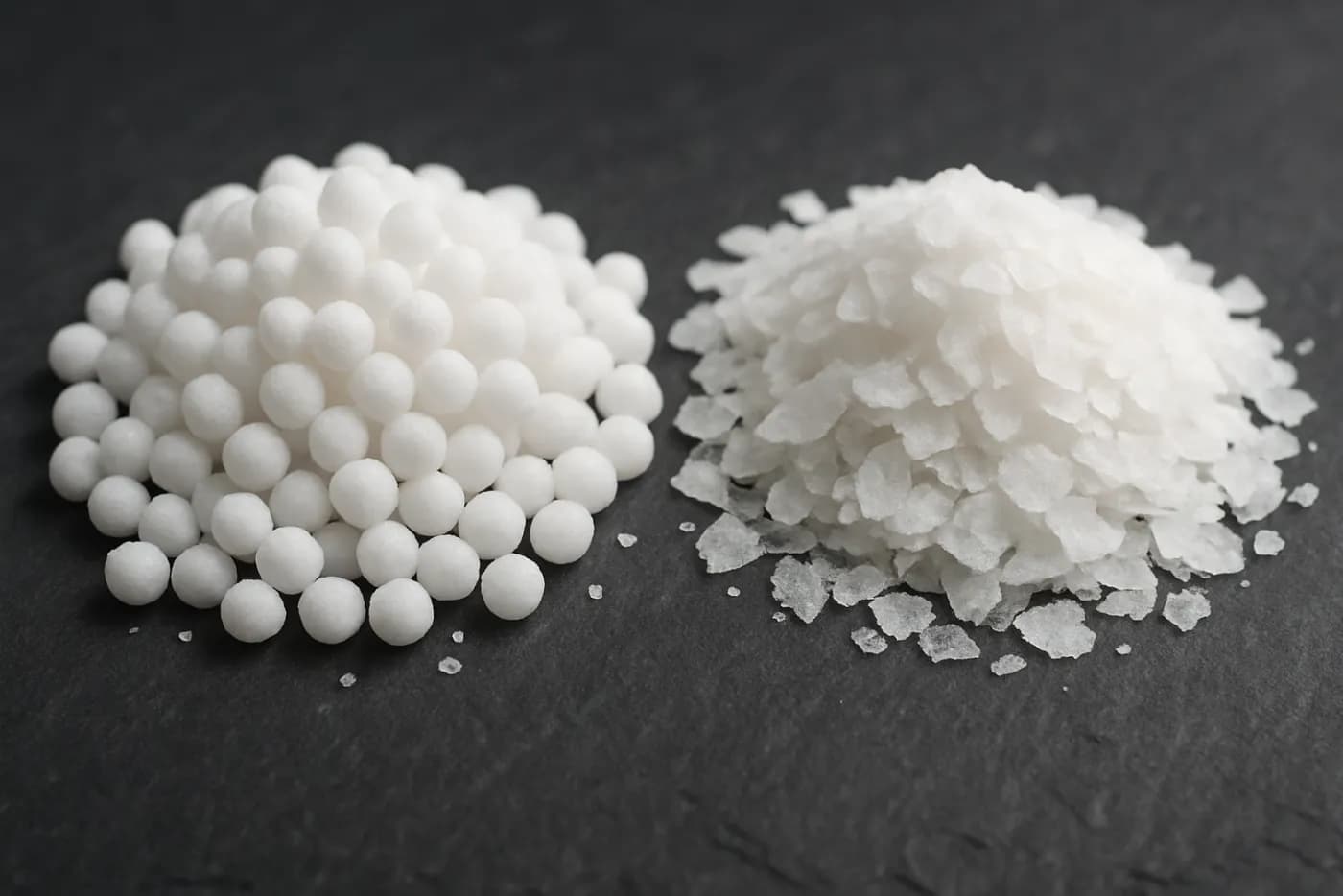
CaCl₂ dissolves exothermically, meaning it releases heat as it goes into solution and starts melting ice almost on contact. That fast, heat-driven action is why crews reach for CaCl₂ ice melt on priority surfaces and during active storms, when waiting for a slower product is not an option. The magnesium grade melts more gently and steadily, which can be an advantage on surfaces you do not want to thermally shock, or where a slower, longer-lasting brine is preferred. Both can be applied as flake, pellet or liquid.
Corrosion and surroundings
Magnesium chloride is generally less corrosive than CaCl₂ and gentler on vegetation, soil and concrete, which makes it a common choice near landscaping, on newer concrete and on sensitive sites such as parking structures and pedestrian areas. CaCl₂ is still widely used in those settings, but where corrosion to rebar, equipment or roadside planting is the primary concern, the magnesium grade is the safer default. Either way, sweeping up excess product after the melt protects surfaces and reduces runoff.
Cost and supply
Magnesium chloride typically costs more per tonne than CaCl₂, and both cost more than rock salt — so the economics usually favour using the premium chlorides where their performance actually pays off, rather than across every open lane. Buying on seasonal contract volume keeps the per-tonne price predictable and guarantees supply through the storms when spot product is hardest to find. Chloride.ca supplies both CaCl₂ and magnesium chloride in flake, pellet and liquid brine, nationwide, under a single account.
How operations combine them
In practice most winter programs do not choose one chloride forever — they layer both. A CaCl₂ base handles deep cold and fast melt on roads and priority surfaces, and crews reach for the magnesium grade where corrosion, concrete or roadside planting is a concern. Because both ship in flake, pellet and liquid brine under one contract, operations can match the chemistry to each route and each surface without juggling suppliers. If you are not sure which split fits your sites, our team will recommend a grade and format based on your local low temperatures and the surfaces you maintain.
Need a quote on bulk or bagged chloride?
Tell us the product, volume and delivery point. Most quotes go out the same business day.