Storing & Handling Chloride
Chloride products are hygroscopic — they actively pull moisture out of the air — which is exactly what makes them work as de-icers and dust suppressants, and exactly why poor storage turns a good pallet into a caked, unusable block. The difference between product that flows freely all season and product that has to be broken up with a bar comes down to a few storage and handling basics. Calcium chloride is the most moisture-hungry of the common grades, rock salt the most forgiving, and liquid brine has its own freezing and contamination concerns — so the right practice differs by product and format, whether you keep a bulk dome, a few pallets of bags or a brine tank on site.
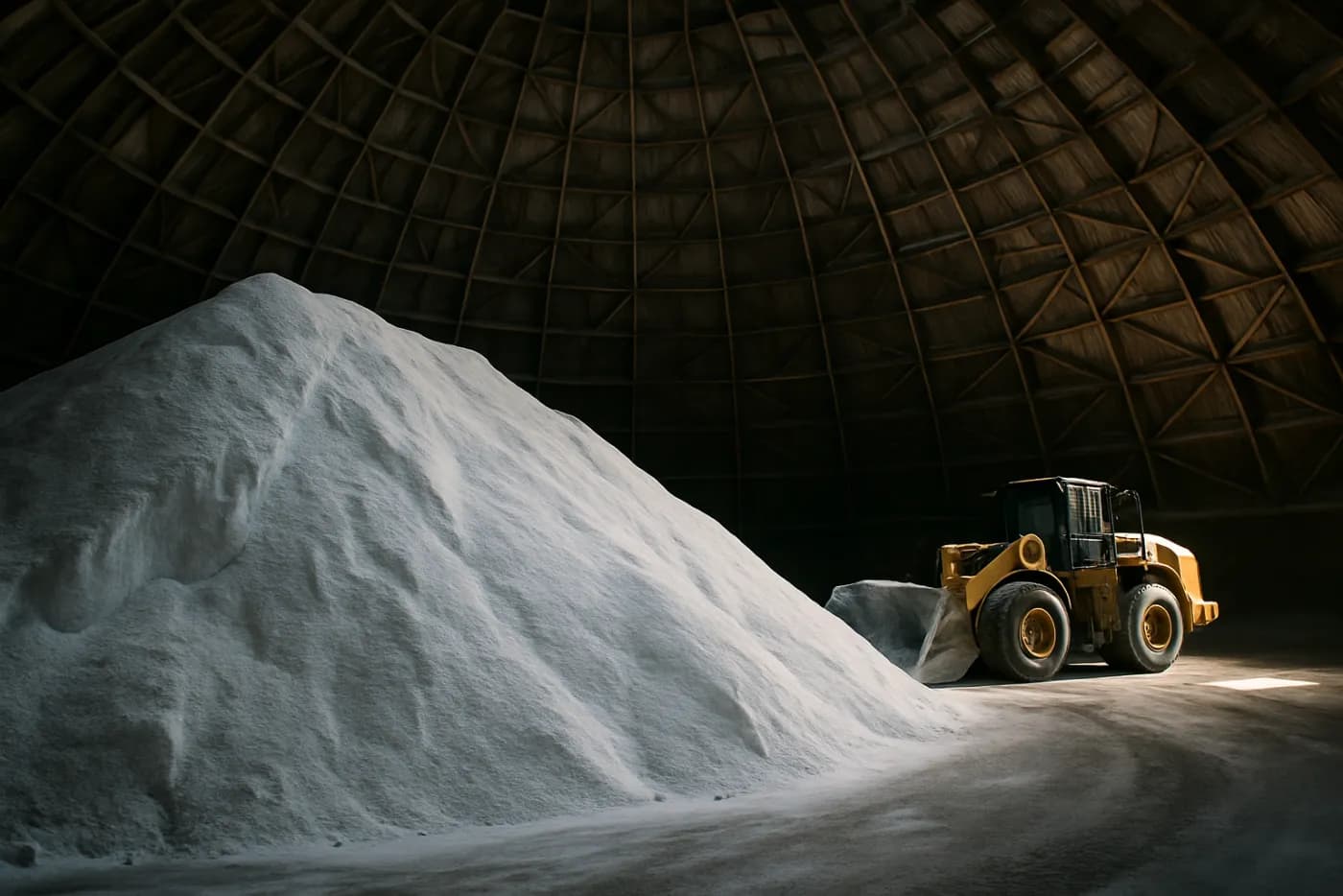
Keep it dry and covered
Store solid chloride in a covered salt dome, a dry building, or sealed bags kept off the ground on pallets and away from humidity. Calcium chloride is the most aggressive moisture-absorber of the common grades and will clump fastest if left open, so reseal opened bags promptly and keep bulk piles covered. Good airflow plus a roof beats a damp, sealed corner that traps condensation.
Bulk vs bagged storage
Bulk solid keeps best in a dedicated dome or bin where it stays dry and can be loaded mechanically. Bagged and tote product is more forgiving for sites without bulk handling — the packaging itself is the moisture barrier — provided the bags stay sealed and are stored out of standing water. Rotate stock so older product is used first rather than sitting through a humid summer.
Liquid brine storage
Liquid chloride needs tanks kept above freezing and protected from contamination. Check the concentration before each application, since dilution or stratification changes how the brine performs. Keep pumps and lines clear, and store tanks where a leak will not reach drains or watercourses.
Handling and safety
Always work from the Safety Data Sheet for each product, wear the appropriate PPE, and avoid mixing different grades or contaminating one with another. Clean up spills promptly — chloride left on equipment accelerates corrosion. Chloride.ca provides a current SDS with every order and can advise on storage setup for bulk, tote and bagged supply.
Season-end and inventory
What you do at season's end decides what you find next fall. Calcium chloride and blended grades left loose or in opened bags over a humid summer will cake hardest, so seal, consolidate and cover remaining stock before warm weather arrives. Take an honest inventory rather than guessing — knowing what carried over lets you order only the top-up you need and avoid a yard full of product that has gone solid. Rotate any carryover to the front so it is used first. A quick end-of-season tidy of the dome or bin, and a check that liquid tanks are clean and protected, keeps the whole operation ready to load the moment the first storm is forecast, instead of fighting caked product when you can least afford the delay.
Need a quote on bulk or bagged chloride?
Tell us the product, volume and delivery point. Most quotes go out the same business day.